


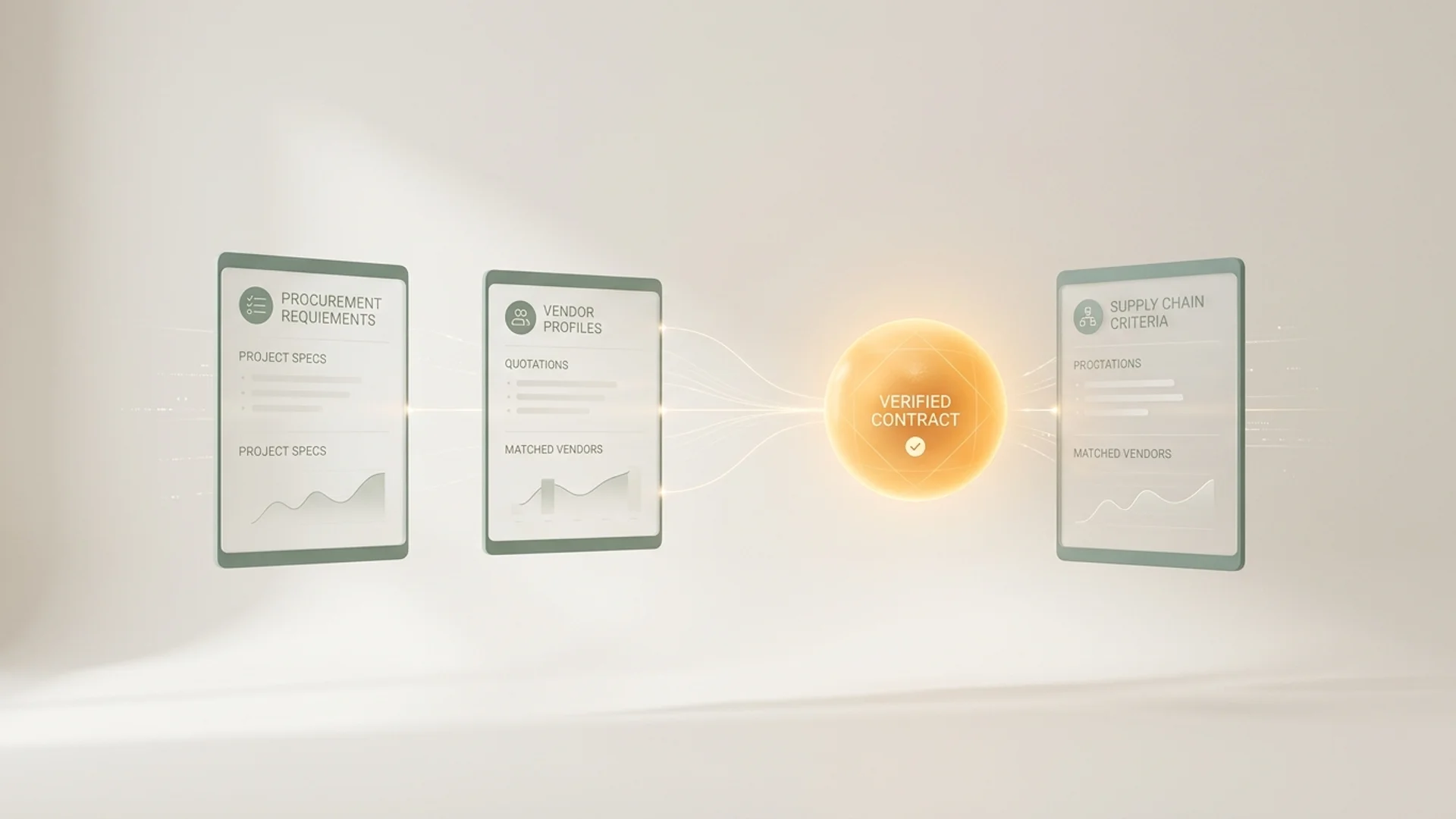
The most disruptive transformation in B2B commerce is taking place on the procurement side. Enterprise ERP and CRM giants such as SAP (with Joule for Procurement), Salesforce (with Agentforce B2B Buyer), and Microsoft Dynamics 365 are aggressively rolling out autonomous purchasing agents. Discover why suppliers lacking machine-readable endpoints are systematically excluded from shortlists and how to make your catalog enterprise AI ready.
Key Takeaways
The Autonomous Sourcing Shift: Enterprise procurement departments now delegate RFP vendor discovery, specification comparison, and quotation requests directly to autonomous AI agents inside SAP and Salesforce.
The ‘Silent Disqualification’ Barrier: Procurement bots do not browse visual layouts or read PDF brochures. Suppliers without direct, machine-verifiable endpoints (MCP/JSON-LD) are instantly disqualified during preliminary filtering.
The Solution: Deploy a Dual-Interface architecture equipped with standardized enterprise adapters, enabling ERP agents to query product specs, live inventory, and volume pricing in milliseconds.
The Paradigm Shift in Enterprise Procurement
For decades, B2B purchasing followed a slow, manual cycle: a procurement officer drafted requirements, browsed Google, attended trade shows, manually requested quotes via contact forms, and spent weeks consolidating PDF quotes in spreadsheets.
In 2026, generative procurement agents have fundamentally automated this entire workflow:
- SAP Joule for Procurement: Manages autonomous sourcing pipelines, validates SLA constraints, audits carbon footprints, and matches product specs directly against enterprise databases.
- Salesforce Agentforce B2B Buyer: Scans global supplier catalogs for verified components, negotiates volume discounts within pre-approved parameters, and generates draft purchase contracts.
- Microsoft Dynamics 365 Copilot Procurement: Monitors real-time supply chain bottlenecks and autonomously executes purchase orders with suppliers offering machine-verifiable inventory data.
The outcome? Sourcing decisions that previously took a month are now evaluated in 45 seconds by an AI reasoning engine.
Why Traditional Websites Fail Procurement Agents
When an autonomous SAP or Salesforce agent evaluates a prospective vendor, it disregards branding, video trailers, and fancy UX animations. Instead, the agent executes an automated data handshake.
This is where 95% of conventional B2B suppliers fail:
Fragile DOM Scraping: Browser-based purchasing bots crash on cookie modals, custom configurators, and heavy JavaScript frameworks, marking the vendor as ‘Unresponsive / Non-Verifiable’.
Opaque Pricing Tiers: Locking prices behind “Contact Sales for Quote” barriers prevents AI bots from evaluating commercial viability. The agent immediately pivots to a competitor with machine-readable pricing formulas.
Missing ISO and Compliance Schemas: Enterprise bots evaluate ISO certifications, RoHS compliance, and delivery guarantees via structured metadata. Without semantic markup, the vendor is classified as high-risk.
The Enterprise Procurement Selection Filter
When an AI procurement engine scans prospective vendors, it follows a strict binary evaluation logic:
- Step 1: Machine-Endpoint Discovery: Does the vendor domain expose standardized
/llms.txtor WebMCP endpoints? If no, the vendor is instantly eliminated. - Step 2: Autonomous Validation: Do technical specs, lead times, and compliance certifications satisfy corporate procurement policies?
- Step 3: Automated Purchase Recommendation: The AI ranks viable suppliers and drafts a Purchase Order (PO) for executive approval.
LLMentry as Your Universal Enterprise Vendor Adapter
Rather than spending hundreds of thousands of dollars on custom API integrations for each ERP platform, LLMentry serves as your turnkey Enterprise Vendor Adapter:
Standardized Model Context Protocol (MCP) Endpoints: LLMentry converts your existing PIM, ERP, or webshop into secure, standardized MCP tools.
Authenticated Enterprise Access via OAuth 2.1: Deliver customer-specific contract pricing and dedicated product lines securely to authorized procurement agents using cryptographic tokens.
- Zero-Latency Data Caching: Instead of serving bloated web pages, LLMentry outputs lightweight Markdown and JSON payloads processed in milliseconds by corporate purchasing bots.
With LLMentry, your B2B enterprise is guaranteed top placement in automated procurement evaluations.
FAQ (Frequently Asked Questions)
How do SAP Joule and Agentforce locate vendor endpoints?
Enterprise procurement bots automatically check standardized root paths during discovery scans, including /llms.txt, /llms-full.txt, and WebMCP manifests. Without these endpoints, the vendor cannot be machine-indexed.
Do B2B suppliers have to expose their entire ERP database to AI bots?
No. LLMentry acts as a secure, selective proxy. You control exactly which specifications and standard tiers are public, while confidential client contracts remain protected behind OAuth 2.1 authentication.
How does LLMentry prevent unauthorized crawlers from seeing negotiated contract prices?
LLMentry differentiates between public search crawlers (like ChatGPT and Google AI) and verified enterprise procurement bots. Public bots receive standardized catalog data, whereas authenticated purchasing bots unlock contract-specific pricing via cryptographic tokens.